We earn a commission if you buy through our links, at no extra cost to you.
Comparison
Best Mirrorless Cameras of 2026: 10 Ranked
We compared the published specs of 10 mirrorless cameras for 2026, from the Sony a7 V to the Canon EOS R50, and ranked them by who each one suits.
B By the Best Mirrorless Camera editorial team ·Published
At a glance
The Sony a7 V is the top all-round pick: a 33MP partially stacked sensor with blackout-free 30 fps bursts and 4K 60p. The Canon EOS R6 Mark III adds 40 fps and 7K RAW video, the Nikon Z6III brings a very bright viewfinder, and the Fujifilm X-T5 suits stills with 40.2MP.
Mirrorless cameras have settled into clear tiers: new stacked-sensor hybrids at the top, compact full-frame bodies in the middle, and light APS-C cameras for people starting out or traveling light. This ranking covers ten models that span all three tiers, from the Sony a7 V to the Canon EOS R50. We did not handle these cameras. Instead, we compared the specifications published by Sony, Canon, Nikon, Fujifilm and Panasonic, along with coverage of the launch announcements (all listed under Sources), and ranked the cameras by who each one suits. Where a source does not state a figure, we say so instead of guessing.
How We Chose
Five questions sort the field quickly.
Sensor size. Full frame gives more light-gathering area and shallower depth of field. APS-C gives smaller lenses, lighter kits and extra reach.
Speed. Partially stacked sensors read out faster, which allows blackout-free bursts and less distortion. Check burst rate and pre-capture if you shoot action.
Stabilization. In-body stabilization helps with slow shutter speeds and handheld video. Some bodies here do not list it.
Video. Look at the highest frame rates, crops, bit depth and recording limits, not only the resolution.
Mount and lenses. The body is the smaller part of the investment. Sony E, Canon RF, Nikon Z, Fujifilm X and L-Mount each have different lens catalogs.
All of the cameras here are sold as bodies, so budget for at least one lens.
Comparison Table
#
Camera
Sensor
Mount
Stabilization
Headline video
1
Sony a7 V
33MP partially stacked full frame
Sony E
In-body, with Dynamic Active Mode for video
4K 60p (full width), 4K 120p (Super 35 crop)
2
Canon EOS R6 Mark III
32.5MP full frame
Canon RF
In-body, up to 8.5 stops (center)
7K Open Gate 30p, 12-bit RAW
3
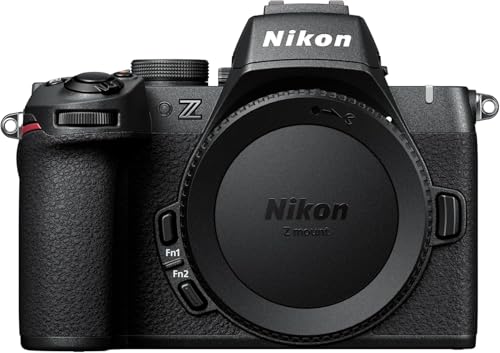
Nikon Z6III
24.5MP partially stacked full frame
Nikon Z
In-body, 8.0 stops
6K N-RAW, 12-bit
4
Fujifilm X-T5
40.2MP APS-C
Fujifilm X
In-body, up to 7.0 stops
6.2K 30p, 4:2:2 10-bit
5
Sony a6700
26MP BSI APS-C
Sony E
In-body, 5-axis
4K 120p, 4:2:2 10-bit
6
Sony a7C II
33.0MP BSI full frame
Sony E
In-body, 7.0 stops
4K 60p (Super 35 crop), 4:2:2 10-bit
7
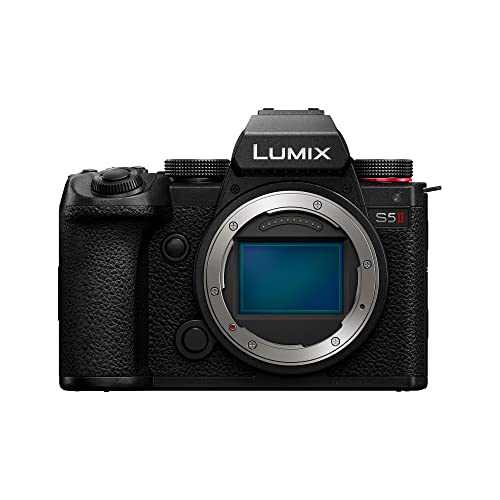
Panasonic Lumix S5II
24.2MP full frame
L-Mount
In-body 5-axis for stills; Active I.S. for video
Unlimited 6K 30p 10-bit (listed modes)
8
Nikon Z50II
20.9MP APS-C
Nikon Z
Electronic VR for video; no in-body figure listed
4K 60p, oversampled from 5.6K
9
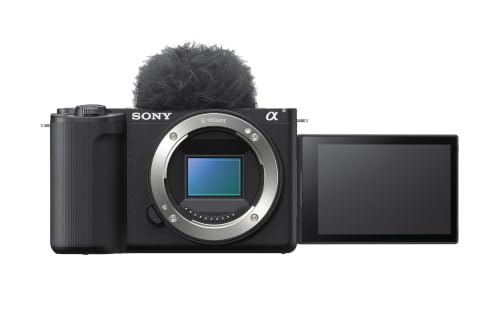
Sony ZV-E10 II
26MP BSI APS-C
Sony E
Electronic Active Mode; no in-body
4K 60p, oversampled from 5.6K
10
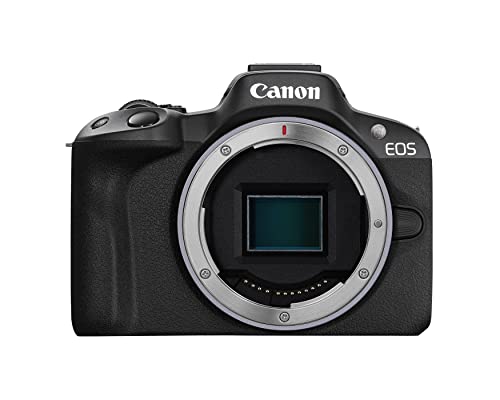
Canon EOS R50
24.2MP APS-C
Canon RF
None in body; Movie Digital IS
4K 30p, oversampled from 6K
Figures come from the manufacturers’ pages and announcements listed under Sources. Stop ratings follow each maker’s CIPA test conditions, so compare them as a guide, not as a promise.
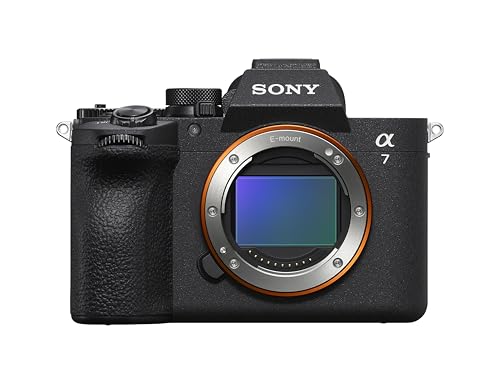
The a7 V succeeds the a7 IV with a new partially stacked sensor. According to coverage of Sony’s announcement, that design allows up to 30 fps with the electronic shutter and no viewfinder blackout, and a one-second pre-capture buffer. Video includes 4K 60p from the full sensor width and 4K 120p with a Super 35 crop, and the viewfinder is an OLED panel of roughly 3.7 million dots. Two card slots, a mix of CFexpress Type A or SD and SD UHS-II, round out a body that works for events and client jobs.
It ranks first because it has no obvious weak spot: the speed is strong, the video is strong, and the camera uses the Sony E mount, which has the broadest lens selection in this list. The trade-off is a premium-tier body. Read more in our Sony a7 V profile.
2. Canon EOS R6 Mark III — Fastest Bursts and the Richest Video Formats
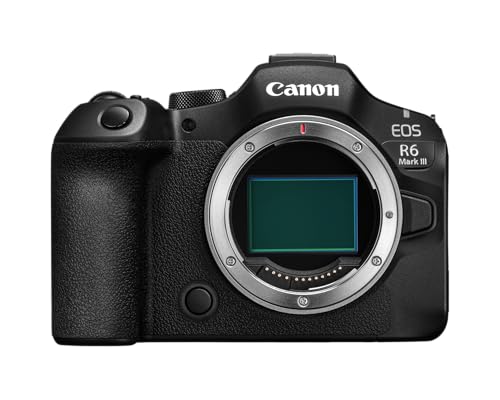
Canon lists a 32.5-megapixel sensor with Dual Pixel CMOS AF II and up to 40 fps with the electronic shutter. Pre-continuous shooting records up to 20 frames before you fully press the shutter. In-body stabilization is rated at up to 8.5 stops at the center and 7.5 at the periphery under Canon’s test conditions, the highest stabilization figure among the manufacturer ratings we found for this list. Video includes internal 7K Open Gate 30p RAW, 7K 60p RAW Light and 4K up to 120p.
It sits second only because the a7 V’s lens ecosystem is broader and its overall balance is slightly easier to recommend. For Canon shooters, wildlife photographers and anyone who wants RAW video, it is the better choice. See our Canon EOS R6 Mark III profile.
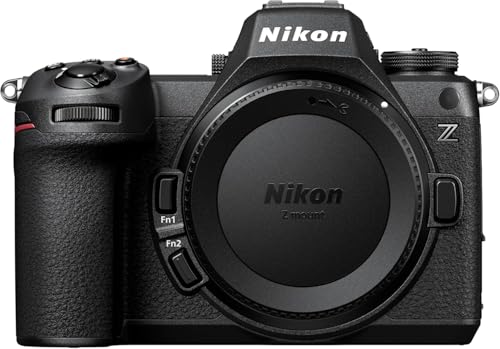
According to Nikon, the Z6III was the first full-frame mirrorless camera with a partially stacked sensor. It lists 24.5 megapixels, vibration reduction equivalent to 8.0 stops, internal 12-bit 6K N-RAW and ProRes RAW HQ, and 4K 60p for up to 125 minutes under Nikon’s stated conditions. The electronic viewfinder is listed at 4,000 cd/m2 and 5,760k dots, which Nikon says is the brightest in mirrorless history.
It ranks third because it has fewer megapixels than the leaders and Pre-Release Capture works only with JPEG files, but its viewfinder and RAW video are excellent. See the Nikon Z6III profile.
4. Fujifilm X-T5 — The Stills Photographer’s Camera
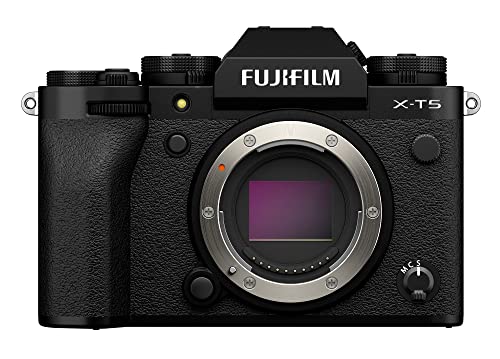
Fujifilm lists a 40.2-megapixel X-Trans CMOS 5 HR sensor, five-axis stabilization of up to 7.0 stops, a 3.69-million-dot viewfinder, dual UHS-II SD slots and a body weight of 1.23 lb (557 g). The body has 56 weather-sealed points and is rated to operate down to 14 degrees Fahrenheit. Pixel Shift Multi-Shot combines 20 frames into a 160MP file with Fujifilm’s software, and video reaches 6.2K at 30p, 4:2:2 10-bit.
It ranks fourth because it is a specialist: the best here for resolution and dial-driven handling, but not built for sports or vlogging. Landscape, street and travel shooters will love it. See the Fujifilm X-T5 profile.
According to Engadget’s report on Sony’s announcement, the a6700 pairs a 26-megapixel back-illuminated APS-C sensor with five-axis in-body stabilization, 4K up to 120p with 10-bit 4:2:2 quality, 11 fps in both shutter modes with autofocus tracking, a vari-angle screen and a 2.36-million-dot viewfinder. It has one SD UHS-II slot, which is the main limit for paid work.
It ranks fifth as the best way into Sony E-mount without moving to full frame, and as a strong choice for wildlife thanks to APS-C reach. See our Sony a6700 profile.
6. Sony a7C II — The Compact Full-Frame Travel Camera
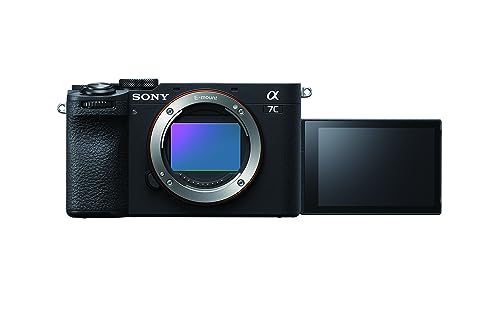
Sony lists a 33.0-megapixel back-illuminated full-frame sensor, the BIONZ XR engine, the same AI processing unit as the a7R V, and 5-axis stabilization rated at 7.0 stops. The body weighs about 18.1 oz with battery and card, 22 percent lighter than the a7 IV. Video includes 4:2:2 10-bit up to 4K 60p, available only in Super 35mm mode. Sony’s release does not list a burst rate or card slots.
It ranks sixth because it trades speed and top-end video for size. It is ideal for travel and everyday carry. See the Sony a7C II profile.
7. Panasonic Lumix S5II — The Video-Minded Full-Frame Body
Panasonic lists a 24.2-megapixel sensor, a 779-point phase-detection hybrid autofocus system, 5-axis stabilization for stills with Active I.S. for video, unlimited 6K 30p 4:2:0 10-bit and 4K 60p 4:2:2 10-bit recording, dual UHS-II SD slots, a 3.68-million-dot viewfinder and up to 30 fps. The page notes thermal limits in some modes: in 6K and 5.9K recording stops after 30 minutes when Thermal Management is left on Default. The body weighs about 1.63 lb (740 g).
It ranks seventh because it is larger and slower than the faster bodies above, but for long interviews, events and travel films it makes a strong case. See the Lumix S5II profile.
Nikon lists a 20.9-megapixel DX sensor, the EXPEED 7 processor shared with the Z9, nine subject-detection types, 4K up to 60p, a viewfinder rated at 1,000 cd/m2 and a 3.2-inch vari-angle touchscreen. Imaging Recipes let you download color looks from Nikon or from creators. Weight is about 1 lb 3.4 oz (550 g) with battery and card. Nikon’s pages do not list in-body stabilization, so pair it with stabilized lenses.
It ranks eighth because it is an entry-level camera, though a thoroughly modern one. See our Nikon Z50II profile.
Sony lists a 26-megapixel Exmor R sensor, 759 phase-detection points with Eye AF for humans, animals and birds, 4K up to 60p oversampled from 5.6K, a vari-angle screen and a three-capsule microphone with a windscreen. Cinematic Vlog and Product Showcase settings speed up common creator tasks. Stabilization is electronic in Active Mode, with a slight crop, plus lens stabilization with the kit zoom. The camera weighs about 13.3 oz (377 g) with battery and card.
It ranks ninth because it is built for one job, and the release does not mention a viewfinder. For that job it is one of the easiest cameras to pick up. See the Sony ZV-E10 II profile.
Canon lists a 24.2-megapixel sensor, DIGIC X, Dual Pixel CMOS AF II with detection of people, animals and vehicles, up to 15 fps with the electronic shutter, 4K 30p oversampled from 6K, a 2.36-million-dot viewfinder and a fully articulating touchscreen. It has no in-body stabilization, one UHS-I SD slot and a USB port at USB 2.0 Hi-Speed level. It weighs about 13.2 oz (375 g) with battery and card.
It ranks tenth only because it leaves out the advanced features of the cameras above. For family photos, travel and social video, it does the job in the smallest package. See the Canon EOS R50 profile.
Which One Should You Buy?
One camera for photos and video: Sony a7 V.
Wildlife, sports and RAW video: Canon EOS R6 Mark III.
Best viewfinder and RAW video: Nikon Z6III.
Landscape, street and travel stills: Fujifilm X-T5.
Lighter kit with reach: Sony a6700.
Smallest full frame: Sony a7C II.
Long recordings and two card slots: Panasonic Lumix S5II.
First serious camera with creative color: Nikon Z50II.
Vlogging and product videos: Sony ZV-E10 II.
Simple, light first camera: Canon EOS R50.
Budget and Experience Level
If you are choosing the body first, think in three bands. The top band, with the newest sensors, is the Sony a7 V, Canon EOS R6 Mark III and Nikon Z6III. The middle band is the Fujifilm X-T5, Sony a6700, Sony a7C II and Panasonic Lumix S5II. The entry band is the Nikon Z50II, Sony ZV-E10 II and Canon EOS R50. Lenses will add to every band, and a mid-range body with an excellent lens often beats a flagship with a weak one. Use the buttons above to see current listings on Amazon.
Conclusion
The Sony a7 V is our first choice because it has no weak spot for people who shoot both photos and video. The Canon EOS R6 Mark III and Nikon Z6III follow for speed, stabilization and RAW video, and the Fujifilm X-T5 leads for stills. The Sony a6700 and a7C II cover the middle for portability, and the Panasonic Lumix S5II suits long video. The Nikon Z50II, Sony ZV-E10 II and Canon EOS R50 are the easiest places to start. Pick the mount and lens ecosystem you can live with, then the body.
Which mirrorless camera is best for most people in 2026?
For a buyer who wants one camera for both photos and video, our top pick is the Sony a7 V, with a 33MP partially stacked sensor, blackout-free 30 fps bursts and 4K 60p. Canon shooters should look at the EOS R6 Mark III, and Nikon shooters at the Z6III.
What is the best mirrorless camera for beginners?
The Canon EOS R50 and the Nikon Z50II are the easiest starting points in this list: small APS-C bodies with subject-detection autofocus and a vari-angle or fully articulating screen. If you mostly make videos of yourself, the Sony ZV-E10 II is built around that job.
Is full frame better than APS-C?
A full-frame sensor is larger, which usually helps in dim light and with shallow depth of field, but the bodies and lenses are bigger and cost more. APS-C cameras such as the Sony a6700 and Fujifilm X-T5 give you smaller kits and extra reach for distant subjects.
Which camera has the best in-body stabilization?
On manufacturer figures, the Canon EOS R6 Mark III lists up to 8.5 stops at the center and the Nikon Z6III lists 8.0 stops. Both ratings come from CIPA procedures with specific lenses, so real results will differ.
Which camera is best for vlogging?
The Sony ZV-E10 II is the most vlogging-focused, with a vari-angle screen, a three-capsule microphone and one-touch Cinematic Vlog settings. The Sony a6700 and Sony a7C II add in-body stabilization and a viewfinder.
Which camera is best for wildlife and sports?
Look at the fastest bursts and deepest pre-capture: the Canon EOS R6 Mark III lists up to 40 fps with 20 frames of pre-continuous shooting, and the Sony a7 V lists 30 fps with pre-capture. APS-C bodies add reach for distant animals.