We earn a commission if you buy through our links, at no extra cost to you.
Best Mirrorless Camera for Wildlife and Bird Photography
What to look for in a mirrorless camera for wildlife and birds: burst speed, pre-capture, subject detection, crop reach and lenses, with four picks.
At a glance
For wildlife and birds, the Canon EOS R6 Mark III leads with 40 fps and 20 frames of pre-capture, while the Sony a7 V offers 30 fps with one second of pre-capture. The Nikon Z6III adds a very bright viewfinder, and the Sony a6700 adds reach on a smaller APS-C body.
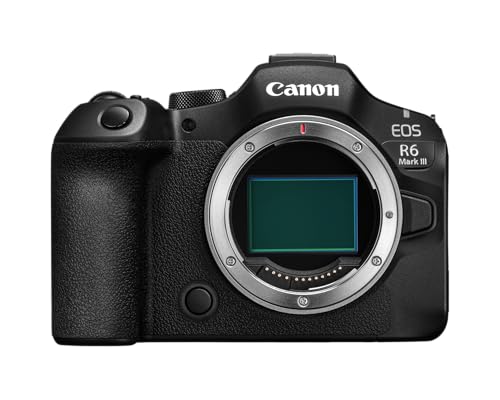
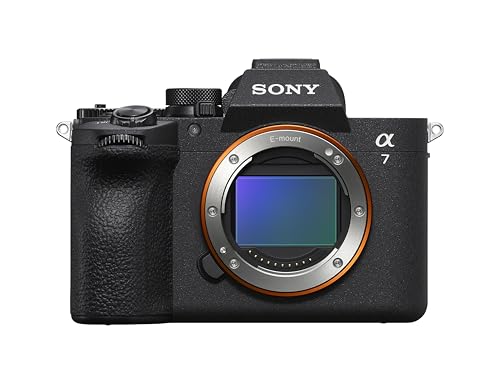
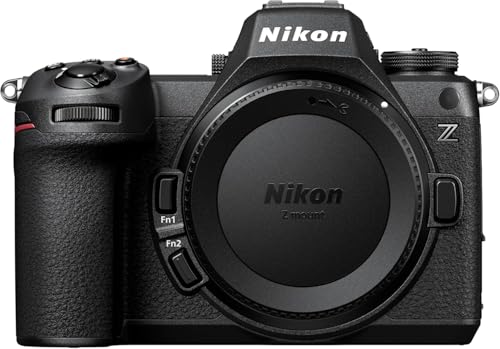
Wildlife photography asks more of a camera than almost any other genre. Subjects are small, far away, fast and unpredictable, and the best moment usually lasts a fraction of a second. This guide explains the specifications that decide whether a mirrorless camera can keep up, then matches four cameras to different kinds of wildlife and bird photographers. For all ten cameras in our lineup, see our ranking of the best mirrorless cameras of 2026.
We have not handled these cameras, and we take no measurements of our own. The numbers below come from manufacturer pages, press releases and trade-press coverage, listed at the end. Where a page did not give a number, we say so.
What Matters for Wildlife and Birds
Burst Speed and Buffer
A fast burst gives you more chances to catch a wing position or a head turn. Canon lists up to 40 fps with the electronic shutter on the EOS R6 Mark III, and says the buffer holds about 150 RAW files in its test conditions with a fast CFexpress card. Sony lists up to 30 fps with 14-bit RAW on the a7 V, and Nikon lists about 20 fps in extended high-speed mode on the Z6III, with High-speed frame capture+ reaching 120 fps in JPEG. These are maximums measured by the manufacturers, so your results depend on the card, the lens and the subject.
Pre-Capture
Pre-capture keeps a rolling buffer, so when you press the shutter, the camera saves frames from just before. Canon says the R6 Mark III records up to 20 frames before the shutter is fully pressed, in RAW, C-RAW or HEIF. Sony says the a7 V records up to one second before. Nikon says the Z6III buffers up to one second, available only with JPEG. For a bird that launches without warning, this feature can be the difference between a keeper and a miss.
Subject Detection
Autofocus that recognizes animals and birds saves you from fighting the focus point in a tangle of branches. Canon lists deep-learning detection of people, dogs, cats, birds, horses and vehicles. Nikon lists nine subject types on the Z6III. Sony lists subject recognition for animals, birds and insects on the a6700, and real-time recognition AF with 759 phase-detection points on the a7 V. No system is perfect, and busy backgrounds or tiny subjects still challenge all of them.
Crop Reach
APS-C sensors frame tighter. With Sony and Nikon APS-C bodies, the crop factor is about 1.5, so a 400mm lens frames like a 600mm lens on full frame. That is useful for small birds. A full-frame sensor can still be cropped in editing, but cropping reduces your pixel count. If you routinely fill the frame with distant subjects, an APS-C body or a high-resolution sensor helps.
Weather Sealing and Battery
Wildlife photography often means rain, mist, dust and cold. Canon says the R6 Mark III is dust- and water-resistant provided all openings are closed and the shoe cover is attached. Nikon cites operation down to 14 degrees Fahrenheit (-10 degrees Celsius) and robustness equivalent to the Z8. Engadget cites a CIPA rating of 750 shots for the Sony a7 V. For long days, carry spare batteries and keep them warm in cold weather.
The Cameras
Best Burst and Pre-Capture: Canon EOS R6 Mark III
Up to 40 fps, 20 frames of pre-continuous shooting in RAW and deep-learning detection of birds and animals. The most complete wildlife spec sheet of the four.
Canon lists a 32.5-megapixel full-frame sensor, 40 fps electronic bursts, 12 fps mechanical, 20-frame pre-continuous shooting, five-axis stabilization rated at up to 8.5 stops at center, and a weight of about 1.54 lb (699 g) with battery and card. It uses CFexpress Type B and SD cards. See our Canon EOS R6 Mark III profile.
Best for Sony Lenses: Sony a7 V
A 33MP partially stacked sensor with 30 fps blackout-free RAW bursts and one second of pre-capture. A strong choice for E-mount owners.
TV Technology lists 30 fps with AF/AE tracking, one second of pre-capture, 759 phase-detection points covering up to 94% of the frame and autofocus down to EV -4.0. Engadget lists 10 fps with the mechanical shutter and stabilization of up to 7.5 stops. Sony’s E-mount has a wide selection of telephoto lenses, including many from third parties. See our Sony a7 V profile.
Best Viewfinder: Nikon Z6III
Nine-type subject detection, Pre-Release Capture and a 4,000-nit viewfinder that stays readable in bright sun.
Nikon lists a 24.5-megapixel partially stacked sensor, about 20 fps in extended high-speed mode, nine subject types, Pre-Release Capture up to one second in JPEG only, and a 5,760k-dot viewfinder rated at 4,000 cd/m2. It weighs about 1 lb 10.9 oz (760 g) with battery and card. The lower resolution means less room to crop. See our Nikon Z6III profile.
Best Lighter Kit: Sony a6700

An APS-C body with AI recognition of birds, animals and insects and about 1.5x crop reach, in a body of about 1 lb 1.4 oz.
Sony’s press text lists a 26-megapixel APS-C sensor, AI processing that recognizes humans, animals, birds, insects, cars, trains and airplanes, and five-axis stabilization rated at 5.0 stops for stills. It does not state a burst speed, so check Sony’s spec page before buying. APS-C bodies pair well with a long, compact telephoto zoom. See our Sony a6700 profile.
Lenses Matter Most
Whichever body you choose, the lens decides how big the bird is in the frame. Telephoto zooms in the 100-400mm to 200-600mm range are common, and super-telephoto primes are larger and heavier. Pair a long lens with a sturdy tripod, monopod or gimbal head, and use a fast shutter speed. As a rule of thumb, aim for a shutter speed at least as fast as one over the focal length, and much faster for flying birds. Confirm that your chosen lens exists in your camera’s mount, since the Canon RF, Nikon Z and Sony E mounts are not interchangeable without adapters.
Field Craft
- Learn your subject’s habits and light direction before you raise the camera.
- Shoot at eye level when you can; it makes more intimate pictures.
- Use back-button focus and a single tracking mode you trust.
- Keep your distance. Never approach nests or dens, and read the regulations for each park or refuge.
- Protect your gear from rain with a cover and carry extra batteries and cards.
Quick Comparison
| Camera | Burst | Pre-capture | Standout |
|---|---|---|---|
| Canon EOS R6 Mark III | Up to 40 fps | 20 frames, RAW | 8.5-stop stabilization rating |
| Sony a7 V | Up to 30 fps | Up to 1 second | 759-point autofocus |
| Nikon Z6III | About 20 fps | Up to 1 second, JPEG only | 4,000-nit viewfinder |
| Sony a6700 | Up to 11 fps | Not listed | APS-C reach, light body |
Bottom Line
For the best spec sheet, choose the Canon EOS R6 Mark III. If you own Sony lenses, the Sony a7 V is the natural fit. If you shoot in bright light, the Nikon Z6III has the best viewfinder, and the Sony a6700 is the lighter kit for travelers. Spend as much on the lens as you can, and see the full ranking for the other cameras.
Sources
- Canon Hong Kong: EOS R6 Mark III sales start
- Canon Asia: EOS R6 Mark III announcement
- TV Technology: Sony unveils Alpha 7 V
- Engadget: Sony a7 V announcement
- Nikon: Nikon releases the Z6III
- Nikon Imaging: Z6III lineup page
- Sony Alpha Rumors: Sony Electronics press text for the a6700
- Engadget: Sony’s 26-megapixel A6700 is its new flagship APS-C camera
Frequently asked questions
What is pre-capture, and why does it matter for birds?
Pre-capture records frames from before you fully press the shutter, so you can catch a take-off you reacted to a moment late. Canon lists up to 20 frames of pre-continuous shooting on the EOS R6 Mark III, Sony lists up to one second on the a7 V, and Nikon lists up to one second on the Z6III, in JPEG only.
Is APS-C or full frame better for birds?
APS-C gives extra reach, because a lens frames about 1.5 times tighter on a Sony or Nikon APS-C body than on full frame. Full frame gives cleaner images in low light and more room to crop. Many bird photographers use full frame with a long lens and crop, others prefer APS-C for the lighter kit.
What lens do I need for bird photography?
Reach matters more than the body. Telephoto zooms in the 100-400mm to 200-600mm range are common choices, and prime super-telephotos are larger and heavier. On a 1.5x APS-C body, a 400mm lens frames like 600mm on full frame. Confirm the lens exists in your camera's mount before you buy.
How fast should the burst rate be?
Faster is not always better. Canon lists up to 40 fps on the EOS R6 Mark III, Sony lists up to 30 fps on the a7 V, and Nikon lists about 20 fps in extended high-speed mode on the Z6III. Autofocus tracking, buffer depth and card speed matter as much as the headline number.
Do I need weather sealing?
If you shoot in rain, mist or dust, yes. Canon describes the R6 Mark III as dust- and water-resistant with all openings closed, and Nikon cites operation down to 14 degrees Fahrenheit (-10 degrees Celsius). Engadget describes the Sony a6700 as dust and moisture resistant; we could not confirm sealing for the Sony a7 V from a page we opened, and lens sealing matters too.
Can I photograph wildlife ethically with a long lens?
Distance is the point of a long lens. Keep far enough away that animals do not change their behavior, never approach nests or dens, and follow the rules of the park or refuge you are visiting. We did not open a source for specific park or drone rules, so read the posted regulations for each location.