We earn a commission if you buy through our links, at no extra cost to you.
Best Mirrorless Camera for Vlogging and YouTube
Choosing a mirrorless camera for vlogging or YouTube: flip screens, microphones, crop, recording limits and heat, with four picks that fit creators.
At a glance
For most vloggers, the Sony ZV-E10 II is the simplest pick, with a three-capsule microphone, flip-out screen and 4K 60p. The Sony a6700 adds in-body stabilization and 4K 120p, and the Sony a7C II brings full-frame low-light quality. The Panasonic Lumix S5II offers 6K 30p and dual SD slots.
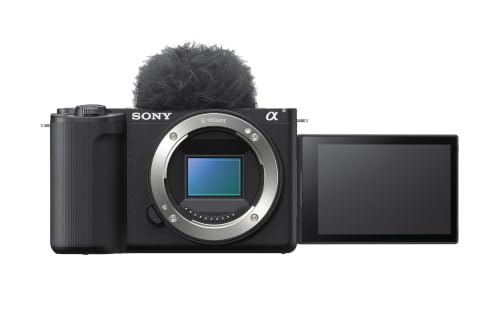

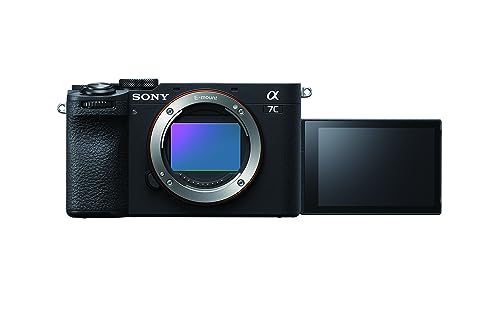
A good vlogging camera is not the one with the longest spec sheet. It is the one that keeps you in frame, in focus and audible for an hour without a fight. This guide covers the features that decide whether a mirrorless camera works for YouTube and social video, then matches four cameras to four types of creator. For the broader field, see our ranking of the best mirrorless cameras of 2026.
We have not handled these cameras, and we take no measurements of our own. The information below comes from manufacturer pages, press releases and a few trade-press articles, all listed at the end. Where we could not open a page that confirms a number, we say so.
What Matters for Vlogging
A Screen That Faces Forward
You cannot frame yourself if you cannot see yourself. A vari-angle screen swings out to the side and rotates to face forward, and a flip-up screen tilts above the camera. Sony lists a vari-angle LCD on the ZV-E10 II and the a6700, and Nikon and Canon list vari-angle or articulating screens on their APS-C bodies. A tilting-only screen, like the three-way tilting design on the Fujifilm X-T5, does not turn to face you, which is why we do not rank that camera for vlogging.
Audio
Viewers forgive soft focus before they forgive bad sound. A built-in microphone is fine for B-roll, but speech needs a dedicated one. Sony says the ZV-E10 II has a three-capsule microphone with selectable directivity and an included windscreen, plus a Multi-Interface shoe that accepts digital audio accessories. Canon lists an external microphone input on the EOS R50 and a 3.5 mm input on the EOS R6 Mark III. Whatever camera you choose, wind noise is the main enemy outdoors, so use a windscreen.
Crop, Stabilization and Lens Width
Walking while filming makes for shaky video. In-body stabilization helps, and so does electronic stabilization, which crops the image. Sony says the ZV-E10 II’s Active Mode applies a slight crop and is not available at higher frame rates. According to Sony’s a7C II coverage on No Film School, its 4K 60p is available only with a Super 35 crop. Cropped video means a tighter field of view, so you need a wider lens to frame yourself at arm’s length. A wide zoom or a prime around 16mm to 20mm on APS-C is a common vlogging lens.
Recording Limits, Heat and Battery
Check how long the camera records in the mode you use. Sony rates the ZV-E10 II at up to 195 minutes of continuous movie recording, with the caveat that actual performance varies. Engadget says the Sony a7 V can record 4K 60p for up to 90 minutes continuously. Canon says the EOS R6 Mark III records normal movies for about six hours. These numbers differ because the cameras are built for different uses, so look up the limit for the exact mode you plan to use.
Autofocus
Face and eye detection keep you sharp when you walk and talk. Sony lists a Product Showcase setting on the ZV-E10 II that shifts focus smoothly from your face to a product you hold up, which suits product demos. We do not claim that any camera never hunts, but modern recognition systems are far better than they were a few years ago.
The Best Cameras for Vlogging and YouTube
Best Simple Choice: Sony ZV-E10 II
Built for creators: flip-out screen, three-capsule microphone with windscreen, 4K 60p and Product Showcase focus. The simplest way to start.
Sony’s press release lists a 26-megapixel sensor, 4K up to 60p oversampled from 5.6K, a vari-angle screen, a weight of about 13.3 oz (377 g) with battery and card, and a battery rated for up to 195 minutes of continuous movie recording. It does not list a viewfinder, which suits video but is a limit for photography in sunlight. Our Sony ZV-E10 II profile covers it in detail.
Best Step Up: Sony a6700
Adds five-axis stabilization, 4K up to 120p and AI recognition to a compact APS-C body. A good fit for creators who also take photos.
Sony’s press text lists 4K up to 120p, S-Log3 and S-Cinetone, five-axis stabilization rated at 5.0 stops for stills, AI Auto Framing and a vari-angle touchscreen. It weighs about 1 lb 1.4 oz. Engadget’s launch coverage lists microphone and headphone ports. We could not confirm a battery-life rating from a page we opened, so check Sony’s spec page. See our Sony a6700 profile.
Best for Low Light: Sony a7C II
A compact full-frame body with stabilization rated at 7 stops and 10-bit 4K. A fit for creators who film in dim rooms and want shallow depth of field.
No Film School lists a 33-megapixel full-frame sensor with the BIONZ XR processor, in-body stabilization of 7 stops, 10-bit full-frame 4K at 30p, 4K 60p only with a Super 35 crop, Full HD up to 120p, and a 3-inch vari-angle touchscreen of about 1.03 million dots. The page does not list weight or battery life. Full frame gives cleaner footage in dim light, but it needs larger lenses. See our Sony a7C II profile.
Best L-Mount Alternative: Panasonic Lumix S5II
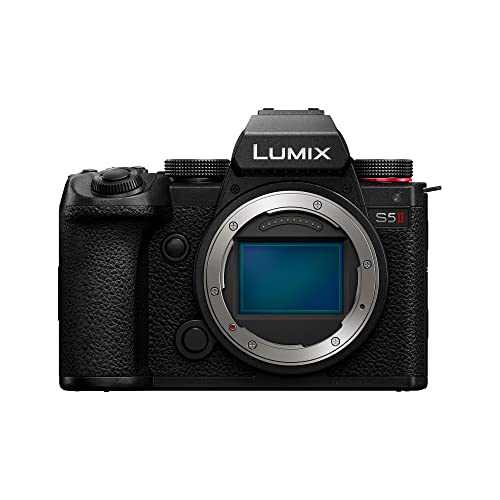
A full-frame hybrid with 4K 60p, 6K 30p and Phase Hybrid autofocus. A candidate for creators who want 6K and dual card slots.
According to Fstoppers’ coverage of the announcement, the S5II has a 24.2-megapixel full-frame sensor, 779-point Phase Hybrid autofocus, five-axis in-body stabilization, 4K and C4K at 60p, 6K at 30p, ProRes and dual UHS-II SD slots, on the L-Mount. The article does not mention a cooling fan or recording limits, so confirm those on Panasonic’s site if long takes are your priority. Read our Panasonic Lumix S5II profile.
How to Choose
| Your situation | Camera |
|---|---|
| New to video, want the easy button | Sony ZV-E10 II |
| Want photos and video from one small body | Sony a6700 |
| Film indoors in low light | Sony a7C II |
| Want 6K, dual card slots and the L-mount | Panasonic Lumix S5II |
Why We Left Some Cameras Out
The Canon EOS R6 Mark III, the Sony a7 V and the Nikon Z6III all record excellent video, but they are larger and heavier than most people want to hold at arm’s length for an hour. The Fujifilm X-T5 has a screen that does not face forward. They are fine cameras, and they appear in our ranking, but the four above are the better fit for walking and talking.
Accessories Worth Buying
A microphone and a windscreen often improve your videos more than a more expensive body would. A small tripod or grip lets you film at arm’s length without shake. A spare battery covers the recording-time gap. A fast memory card avoids dropped frames in high-bitrate modes. If you stream, check that the camera works as a webcam over USB.
Bottom Line
Pick the Sony ZV-E10 II if you want the easiest path to good vlogs. Move to the Sony a6700 if you also shoot photos, the Sony a7C II if you film in low light, and the Panasonic Lumix S5II if you want 6K video and dual card slots on the L-mount. Read the full ranking to see all ten cameras, and spend part of your budget on audio.
Sources
- Sony Electronics: ZV-E10 II announcement
- Sony Alpha Rumors: Sony Electronics press text for the a6700
- No Film School: Sony a7C II
- Fstoppers: Panasonic announces the Lumix S5II and S5IIX
- Engadget: Sony a7 V announcement
- Canon Asia: EOS R6 Mark III announcement
- Canon Vietnam: EOS R50 (Body) specifications
- Engadget: Sony’s 26-megapixel A6700 is its new flagship APS-C camera
Frequently asked questions
What matters most in a vlogging camera?
A screen that faces forward, reliable autofocus on your face, decent audio and enough battery for a full shoot. Sensor size and megapixels matter less than most spec sheets suggest. A vari-angle screen, a microphone input or a good built-in mic, and a lens wide enough to frame yourself at arm's length matter more.
Why does crop matter for vlogging?
Some cameras crop the image when electronic stabilization is on or when you record certain video modes. Sony says the ZV-E10 II's Active Mode applies a slight crop, and the a7C II's 4K 60p is available only with a Super 35 crop. A crop makes your lens frame tighter, so at arm's length you may need a wider lens.
Will a mirrorless camera overheat while I film?
It depends on the model and the mode. Heat limits are usually listed in the manual rather than the marketing page. We did not open a page that states the limits for the Panasonic S5II, so confirm them on Panasonic's site if long takes matter to you. Always check the recording-time limit of the specific video mode you plan to use.
Do I need an external microphone?
For clear speech, usually yes. Built-in microphones pick up room noise and wind. The Sony ZV-E10 II has a three-capsule microphone with a windscreen, and its Multi-Interface shoe takes a compatible external mic. Canon's R50 lists an external microphone input. Plan on a shotgun or lavalier microphone if you film outdoors.
Is full frame better for YouTube?
It can be, especially in low light, but it is not required. APS-C cameras like the Sony ZV-E10 II and a6700 are lighter and cheaper to build a kit for. Full frame gives you cleaner dim-light video and shallower depth of field, at the cost of bigger lenses.
How long can I record on one battery?
Sony rates the ZV-E10 II at up to 195 minutes of continuous movie recording, noting that actual performance varies. Other models we cover do not list a comparable figure on pages we opened, so check the manufacturer's page. Carry a spare battery and consider USB power for long streams.