We earn a commission if you buy through our links, at no extra cost to you.
Best Mirrorless Camera for Beginners: What to Buy
Buying your first mirrorless camera? What sensor size, kit lens, screen and battery details matter, plus four beginner-friendly APS-C picks.
At a glance
For a first mirrorless camera, the Canon EOS R50 is the lightest and simplest, while the Nikon Z50II adds a 30 fps burst and a bright viewfinder. The Sony a6700 is the room-to-grow pick, and the Sony ZV-E10 II suits beginners who mostly film video.

Your first interchangeable-lens camera is a bigger decision than it looks, because you are choosing a lens system as much as a body. Camera bodies turn over every few years, while a lens can last a decade or two. This guide explains the handful of specifications that matter for a beginner, then matches four APS-C cameras to four kinds of first-time buyer. For the full field including full-frame bodies, see our ranking of the best mirrorless cameras of 2026.
We have not handled any of these cameras, and we take no measurements of our own. Everything below comes from the manufacturers’ published pages and press materials, which we list at the end. Where a page did not give a number, we say so.
What Beginners Should Look For
Sensor Size and Crop Factor
All four cameras below use an APS-C sensor, which is smaller than a full-frame sensor. The practical effect is a crop factor of about 1.5 for Sony, Nikon and Fujifilm and about 1.6 for Canon. A 50mm lens frames like a 75mm lens on a Sony APS-C body, so you gain reach but lose some width. APS-C bodies and lenses are smaller, lighter and cheaper than full-frame equivalents, which matters when you carry the kit all day. Full frame is a better choice if low-light photography and shallow depth of field are your priority and you can afford the weight.
The Lens Matters More Than the Body
The cameras we link to are sold as bodies only. A standard zoom lens, typically covering wide-angle to short telephoto, is the usual first purchase. After that, a fast prime lens such as a 35mm or 50mm is the cheapest way to get blurred backgrounds and good low-light pictures. Before you buy anything, confirm the mount: Canon RF-S, Nikon Z DX and Sony E are different, and adapters add cost and sometimes disable features.
Screen and Viewfinder
A screen that swings out and rotates, called vari-angle, is helpful for low shots, selfies and video. Canon lists a 3.0-inch fully articulating touchscreen on the EOS R50, Nikon lists a vari-angle touch monitor on the Z50II and Sony lists a vari-angle touchscreen on the a6700 and ZV-E10 II. A viewfinder helps in bright sun, when a rear screen is hard to see. Canon lists a 0.39-inch OLED viewfinder of about 2.36 million dots on the R50, and Nikon rates the Z50II finder at 1,000 cd/m2. The page we opened for Sony’s ZV-E10 II does not mention a viewfinder, so check that before you buy.
Autofocus and Automatic Modes
Modern mirrorless cameras recognize faces, eyes, animals and vehicles automatically. Nikon says the Z50II detects nine subject types, Sony says the a6700 recognizes humans, animals, birds, insects, cars and trains, and airplanes, and Canon lists deep-learning detection on its newer bodies. For a beginner, that means the camera finds the subject for you while you learn composition. Start in an automatic or priority mode, then move to manual as you gain confidence.
Stabilization, Battery and Cards
In-body stabilization keeps handheld shots sharp. Sony lists five-axis in-body stabilization on the a6700. Canon’s R50 page we opened says the body has no in-body stabilization, though it offers digital stabilization for movies and works with stabilized RF lenses. Battery life is rated with the CIPA standard, and a spare battery is cheap insurance. Cards are inexpensive, but buy from a known brand and match the card to your video needs.
Our Picks for First-Time Buyers
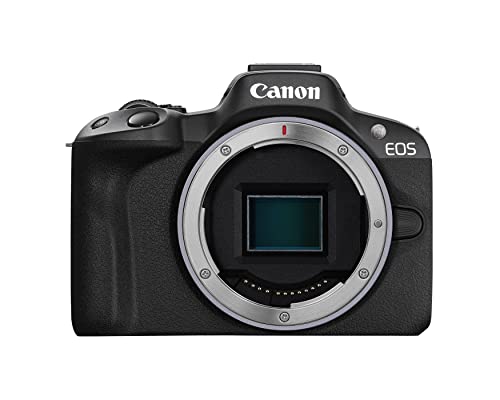
Smallest and Simplest: Canon EOS R50
A light, simple APS-C body with a fully articulating screen and an easy path into Canon's RF lens range. A first camera for travel and family photos.
Canon’s page lists a 24.2-megapixel APS-C sensor, the DIGIC X processor, up to 15 fps with the electronic shutter, 4K video at 30p oversampled from 6K, and a weight of about 13.2 oz (375 g) including battery and card. It has a single SD card slot, an external microphone input and no in-body stabilization. That makes it the lightest and most pocketable pick, so it is more likely to come along on every outing. The limits are the single card slot, the lack of in-body stabilization and a smaller selection of native APS-C lenses than Sony offers. Read our Canon EOS R50 profile for the full details.
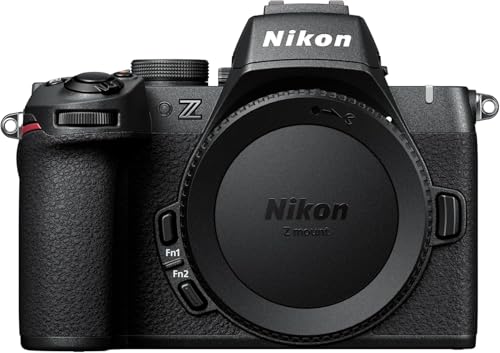
Best Viewfinder and Speed: Nikon Z50II
An APS-C Nikon with nine-type subject detection, a very bright viewfinder and a vari-angle screen. A good fit for beginners who want room to grow into action photos.
Nikon’s release lists a DX-format sensor, up to 30 fps in High-Speed Frame Capture+ with one second of Pre-Release Capture, nine subject types and a 1,000 cd/m2 viewfinder, about twice as bright as the original Z50. Video goes up to 4K UHD at 60p according to Nikon, with 4K oversampled from 5.6K. The page we opened does not mention in-body stabilization, only electronic vibration reduction, so lens stabilization matters. See our Nikon Z50II profile.
Room to Grow: Sony a6700
A compact APS-C body with AI subject recognition, five-axis stabilization and 4K 120p. A beginner camera you will not outgrow quickly.
Sony’s press text lists a 26-megapixel back-illuminated sensor, an AI processing unit, five-axis stabilization rated at 5.0 stops, a vari-angle touchscreen and 4K up to 120p. It weighs about 1 lb 1.4 oz. It is the most capable camera of the four and also the most complex, so expect a longer learning curve. It suits a beginner who is serious about photography and wants a camera that will last. Read our Sony a6700 profile.
For Video First: Sony ZV-E10 II
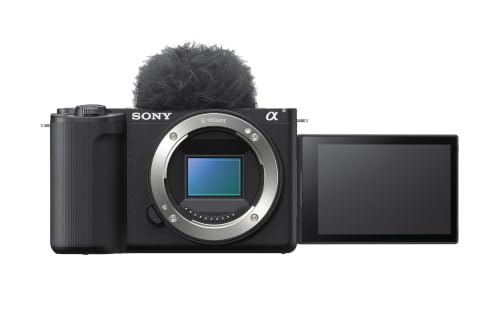
A vlogging-oriented APS-C body with a flip-out screen, a three-capsule microphone with windscreen and 4K 60p. A first camera if you mostly shoot video.
Sony lists a 26-megapixel back-illuminated sensor, 4K up to 60p oversampled from 5.6K, a vari-angle screen, a three-capsule microphone with a windscreen, and a weight of about 13.3 oz (377 g) with battery and card. It also offers an electronic stabilization mode, Active Mode, which applies a slight crop. Sony rates the battery at up to 195 minutes of continuous movie recording. If your goal is videos for YouTube or social media, start here. See our Sony ZV-E10 II profile.
Quick Comparison
| Camera | Best for | Standout feature |
|---|---|---|
| Canon EOS R50 | Travel and family | About 13.2 oz (375 g) with battery and card |
| Nikon Z50II | Action and bright light | 30 fps and a 1,000 cd/m2 viewfinder |
| Sony a6700 | Growing into serious use | Five-axis stabilization and AI recognition |
| Sony ZV-E10 II | Video first | Three-capsule mic and flip-out screen |
A Beginner’s Buying Checklist
- Decide whether photos or video matter most, and pick the body accordingly.
- Confirm the lens mount before you buy lenses, and plan one zoom and one prime.
- Buy a spare battery and a reputable memory card.
- Read the exact listing title: the models we link to are bodies only.
- Consider full frame only if low-light performance and background blur are priorities. Our ranking covers those cameras too.
Bottom Line
If you want the lightest kit, start with the Canon EOS R50. If speed and a bright viewfinder matter, the Nikon Z50II is the pick. The Sony a6700 gives you the most room to grow, and the Sony ZV-E10 II fits video-first beginners. Spend as much on the lens as on the body, and shoot often; practice will teach you more than any spec sheet.
Sources
Frequently asked questions
Should a beginner buy full frame or APS-C?
For most first-time buyers, APS-C. The bodies are smaller and lighter, and lenses made for the format are smaller and generally cheaper. Full frame gives you better low-light performance and more background blur, but you pay for it in weight and lens cost. If you may upgrade later, pick a brand whose lenses work on both, such as Sony E-mount.
What does crop factor mean?
APS-C sensors are smaller than full-frame sensors, so a lens frames a tighter view. For Sony, Nikon and Fujifilm APS-C the factor is about 1.5, so a 50mm lens frames like a 75mm lens on full frame. Canon's APS-C factor is about 1.6. It matters most when you buy wide-angle lenses and when you want extra reach for distant subjects.
Do I need a kit lens?
You need some lens, because the cameras we link to are listed as bodies only. A standard zoom is the usual first choice because it covers wide-angle to short telephoto. Check the exact lens mount first: Canon RF-S, Nikon Z DX and Sony E lenses are not interchangeable with each other without adapters.
Do I need in-body stabilization?
It helps for low-light photos and handheld video, but it is not essential. Canon's EOS R50 and Nikon's Z50II pages we opened do not list in-body stabilization, so they rely on stabilized lenses or electronic stabilization for video. The Sony a6700 has five-axis in-body stabilization.
How many photos can a mirrorless camera take on one battery?
Mirrorless cameras use their screen or viewfinder constantly, so battery life is shorter than on older DSLRs. The standard rating is called CIPA, and it measures stills under a fixed routine. Not every page we opened lists it, so check the manufacturer's page for the model you choose and buy a spare battery.
What memory card should I buy?
Canon lists SD, SDHC and SDXC cards for the EOS R50, with UHS-I compatibility. For 4K video and fast bursts, buy a card rated for video speeds from a known brand, and check the camera maker's recommended list.